


Chemical earthing installation is one of the most effective methods for achieving a low-resistance and maintenance-free grounding system. In today’s industrial, commercial, and residential environments, a properly installed earthing system plays a critical role in protecting electrical equipment, preventing electrical shocks, and ensuring operational safety.
Unlike conventional grounding methods, chemical earthing uses specially designed electrodes and conductive compounds to maintain consistent earth resistance throughout the year. At Kasaku Electricals Pvt. Ltd., we provide high-quality chemical earthing solutions designed to meet modern electrical safety standards and industry requirements.
What is Chemical Earthing Installation?
Chemical earthing installation is the process of installing a specialized earthing electrode surrounded by conductive backfill compounds to create a highly efficient grounding system. The conductive material helps retain moisture and improve electrical conductivity, resulting in stable performance even in dry or rocky soil conditions.
This installation method is widely preferred in industries, manufacturing plants, commercial complexes, data centers, telecom towers, substations, and solar power projects due to its long service life and low maintenance requirements.
Why is Chemical Earthing Installation Important?
A properly executed chemical earthing installation offers several benefits that directly contribute to electrical safety and equipment protection.
Benefits of Chemical Earthing Installation
- Provides consistently low earth resistance.
- Protects equipment from voltage surges and lightning strikes.
- Reduces the risk of electrical shocks.
- Improves system reliability and performance.
- Requires minimal maintenance compared to conventional earthing.
- Performs effectively in varying soil conditions.
- Offers long operational life.
For industries that rely on uninterrupted power supply, an efficient grounding system is essential for minimizing downtime and preventing costly equipment damage.
Chemical Earthing Installation Process
Understanding the installation process helps ensure that the earthing system delivers optimal performance for years.
-
Site Assessment
The first step involves evaluating soil conditions, electrical load requirements, and environmental factors. Proper assessment helps determine the most suitable earthing electrode and installation depth.
-
Pit Excavation
A pit is excavated according to the project specifications. The depth and diameter may vary depending on the application and soil characteristics.
-
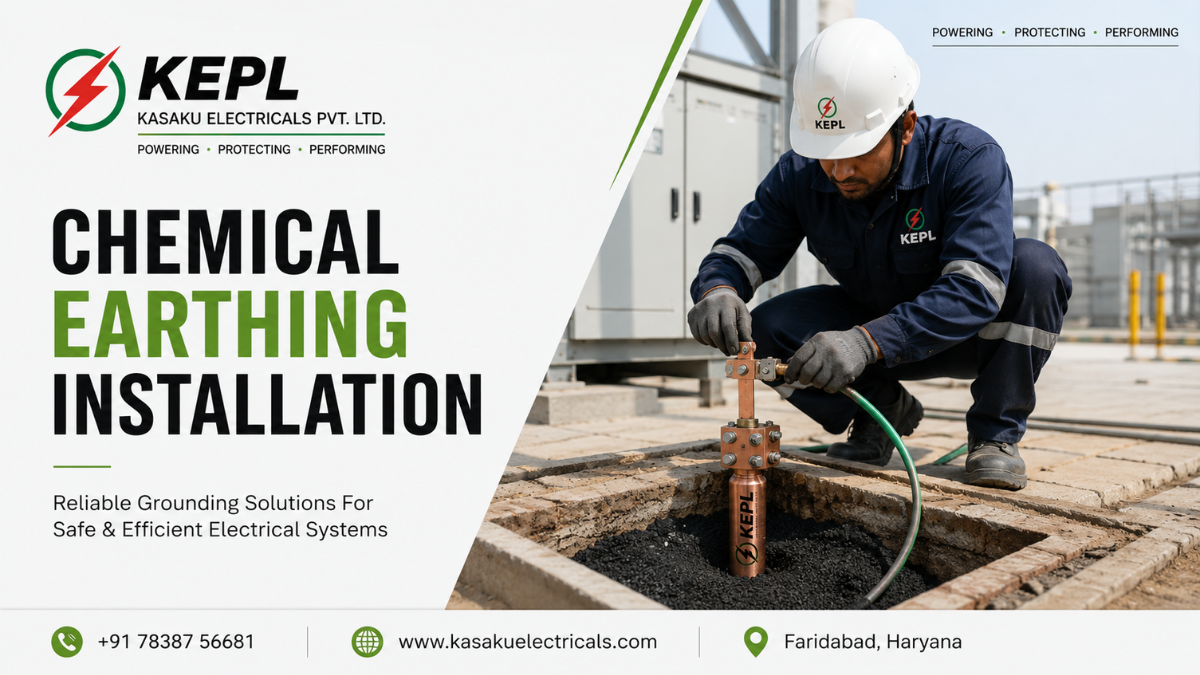
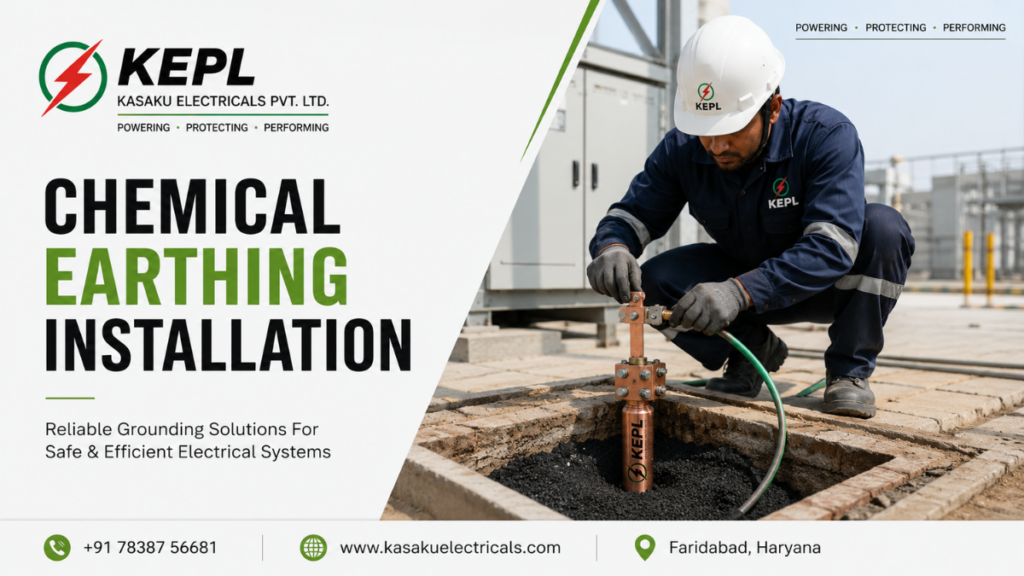
Electrode Placement
The chemical earthing electrode is positioned vertically inside the pit. Common options include GI chemical earthing electrodes, copper-bonded electrodes, and pure copper electrodes.
-
Backfill Compound Filling
Special conductive compounds are filled around the electrode. These compounds improve conductivity and help maintain moisture around the grounding system.
-
Connection to Electrical System
The electrode is connected to the electrical network using suitable conductors and clamps to ensure secure grounding.
-
Earth Resistance Testing
After installation, testing is performed to verify that the desired earth resistance values have been achieved.
Applications of Chemical Earthing Installation
Chemical earthing installation is suitable for a wide range of industries and infrastructure projects.
Industrial Facilities
Manufacturing plants, factories, and process industries require robust grounding systems to protect machinery and personnel.
Commercial Buildings
Office complexes, shopping centers, and institutional facilities benefit from reliable earthing systems that ensure electrical safety.
Solar Power Projects
Solar installations require efficient grounding to protect equipment from faults and lightning-related damage.
Telecom Towers
Communication infrastructure depends on stable grounding systems to safeguard sensitive electronic equipment.
Data Centers
Data centers utilize chemical earthing systems to ensure uninterrupted operation and equipment protection.
Factors to Consider Before Chemical Earthing Installation
Several factors influence the effectiveness of an earthing system.
Soil Resistivity
Soil composition significantly impacts grounding performance and determines the type of electrode required.
Electrode Material
Selecting the appropriate electrode material, such as GI, copper-bonded, or pure copper, affects durability and conductivity.
Installation Standards
Compliance with relevant electrical standards ensures safety, reliability, and long-term performance.
Project Requirements
The grounding system should be designed according to the facility’s electrical load and operational needs.
Why Choose Kasaku Electricals Pvt. Ltd. for Chemical Earthing Installation?
At Kasaku Electricals Pvt. Ltd., we specialize in providing advanced earthing solutions tailored to diverse industrial and commercial applications. Our expertise in chemical earthing installation enables us to deliver reliable grounding systems that meet stringent safety requirements.
Our solutions are designed to offer:
- High conductivity performance
- Long service life
- Low maintenance requirements
- Compliance with industry standards
- Reliable protection against electrical faults
Whether you require earthing solutions for industrial plants, solar projects, commercial facilities, or telecom infrastructure, our team can help implement a dependable grounding system.
Conclusion
A well-planned chemical earthing installation is essential for maintaining electrical safety, protecting valuable equipment, and ensuring uninterrupted operations. By using high-quality electrodes and proper installation techniques, organizations can achieve long-lasting grounding performance across various applications.
For reliable and professional chemical earthing solutions, Kasaku Electricals Pvt. Ltd. offers industry-focused expertise and dependable products designed to meet modern grounding requirements.