
Copper Chemical Earthing
Copper Chemical Earthing is a highly advanced grounding solution for the protection of electrical systems from various electrical faults, leakage currents, and lightning strikes. Once copper chemical earthing is installed in any electrical installation, safety is ensured.
Unlike conventional earthing systems, which are adversely affected by soil conditions and are subject to deterioration by corrosive action of the soil, copper chemical earthing utilises a copper electrode of high conductivity along with conductive compounds for maintaining low earth resistance. The copper chemical earthing method provides a highly conductive path for safely grounding fault currents to the earth.
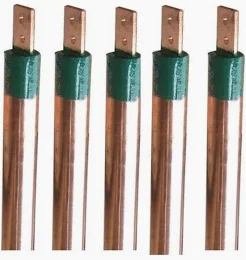
Copper Chemical Earthing
Features of Copper Chemical Earthing
A properly designed copper chemical earthing offers several features that make it suitable for modern electrical applications.
- High Electrical Conductivity – Copper has high electrical conductivity properties; therefore, fault currents are safely dissipated to the earth.
- Low Earth Resistance – Conductive compounds and chemical earthing powder ensure low earth resistance for effective grounding.
- Corrosion Resistance – Copper has high corrosion resistance properties for durable use.
- Long Service Life – Durable design for effective grounding over a period of time with low maintenance.
- Consistent Performance – Conductive compounds ensure consistent performance even in varying earth conditions.
Standards Followed in Chemical Earthing
Good quality copper chemical earthing systems are installed according to established electrical safety standards. In India, earthing systems are installed according to guidelines provided by IS:3043, “Earthing systems.”
The standards ensure that the earthing system has low resistance, and fault current is safely dissipated, protecting electrical equipment and human life from electrical hazards. Electrical earthing should be installed according to proper standards for a safe electrical grounding system.
Components of Copper Chemical Earthing
It consists of various parts that function collectively to provide grounding.
- Copper Earthing Electrode – The electrode is the main component that conducts electrical current into the ground. It is usually made from high-purity copper or copper-bonded earthing material.
- Conductive Backfill Compound –Special compounds are used to cover the electrode. The compounds improve the conductivity of the soil and retain moisture levels.
- Earthing Pit Chamber – The earthing pit chamber protects the electrode connection and provides easy access for inspection and maintenance.
- Earthing Strip or Conductor – Copper or GI strips are used to connect the electrode to the electrical system and carry fault current to ground.
- Watering Pipe – Some systems include a watering system to maintain moisture around the electrode if required.
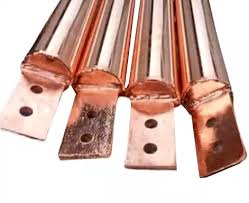
Copper chemical earthing electrode
What Are the Different Sizes and Specifications of Chemical Earthing Electrodes?
A chemical earthing electrode is a specialised grounding device used to safely dissipate electrical fault currents into the earth. It is designed to provide low earth resistance and reliable electrical grounding, even in areas where soil resistivity is high. Unlike conventional earthing methods, chemical earthing uses a metal electrode surrounded by conductive compounds or chemical earthing powder to improve soil conductivity and maintain stable performance.
The electrode is typically installed vertically into the ground inside an earthing pit. Conductive backfill materials help retain moisture and enhance the conductivity of the surrounding soil. This ensures that the electrical current can safely flow into the ground during electrical faults, lightning strikes, or leakage currents. Chemical earthing systems are widely used in industrial plants, commercial buildings, telecom towers, data centres, and power distribution systems where reliable grounding is essential for electrical safety.
Specifications of Chemical Earthing Electrodes
The manufacturing of chemical earthing electrodes is done as per specific technical specifications to ensure their proper performance.
- Material – Copper, Galvanized Iron (GI), or Copper Bonded Steel.
- Electrode Diameter – It is usually between 40 mm and 80 mm.
- Length – It is usually between 1 meter and 3 meters.
- Conductive Backfill Compound – It is a special chemical earthing powder or conductive compound used for improving soil conductivity.
- Corrosion Resistance – It is designed to be corrosion-resistant for long life.
- Low Earth Resistance – It maintains low earth resistance levels for effective grounding.
The selection of the right size and specification of the chemical earthing electrode is based on various parameters such as soil resistivity, load current, safety aspects, and the environment of installation. Properly designed and installed earthing electrodes are essential for effective grounding and the safety of equipment and circuits.
Applications of Copper Chemical Earthing
They are frequently used across various sectors for providing electrical safety.
- Industrial Buildings – Industrial Plants and Factories use earthing systems to protect large industrial machinery as well as electrical installations.
- Commercial Buildings – The safety of Commercial Building types such as Offices, Shopping Centers, and Hotels relies heavily on a quality earthing system.
- Telecommunication Towers – Because telecommunication towers are often struck by lightning. Proper earthing is necessary for protection against damage.
- Data Centres – Data Centres rely on their electrical systems to avoid potential downtime due to Electronic Equipment Failure and/or other Electronic Equipment Issues. The systems must have proper earthing.
- Power Plants and Power Sub-Stations – Both Power Generation and Distribution must be safely completed with well-designed Grounding Systems.
- Healthcare Facilities – The improper Earthing of any equipment connected to Medical Devices and/or other Medical Equipment could result in Life-Threatening Incidents. Hospitals must utilise an adequate Grounding System.
- Residential Buildings – With large-scale residential construction, the use of chemical earthing systems is utilised to ensure their safety and effective grounding practices.
Installation Process
Chemical earthing installation is essential to ensure the effectiveness of the copper chemical earthing system.
- Site Preparation – A suitable location is selected for installing the earthing electrode based on soil conditions and electrical layout.
- Pit Excavation – A pit is excavated according to the required depth and dimensions to accommodate the earthing electrode.
- Electrode Placement – The copper electrode is installed vertically inside the pit.
- Filling with Conductive Compound – The pit is filled with conductive chemical compounds around the electrode to improve soil conductivity.
- Electrical Connection – The electrode is connected to the electrical system using copper or GI strips.
- Earthing Pit Installation – A protective earthing chamber is installed at the top to provide easy access for inspection. After installation, the earth resistance value is measured to ensure it meets safety standards.
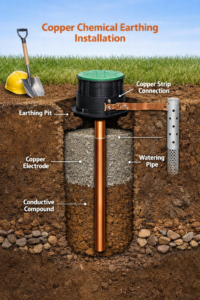
Copper chemical earthing system installation
Pricing of Copper Chemical Earthing Systems
The cost of a Copper Chemical Earthing System varies based on factors like electrode size, copper quality, installation depth, quality of conductive backfilling compounds, and site requirements. High-quality copper electrodes are expensive compared to other materials, but copper has better conductivity, corrosion resistance, and longevity. The cost may further be dependent on the number of earthing pits, installation requirements, and project scale.
Though copper chemical earthing systems may be expensive compared to conventional earthing systems, copper chemical earthing systems are cost-effective and have low maintenance, making them suitable for use in industrial, commercial, and domestic electrical systems.
Why Choose a Copper Chemical Earthing?
Copper chemical earthing systems are popularly used in modern electrical systems.
Copper chemical earthing systems are known for their high conductivity, long life, and earthing capabilities. Also known as chemical pipe earthing, this system uses the highest quality copper electrodes to ensure effective earthing.
Compared to other earthing systems, copper electrodes offer low resistance, high corrosion resistance, and long life. These systems are best for use in industries, commercial buildings, telecom towers, data centres, and power plants.
Conclusion
The role of copper chemical earthing is critical in ensuring the safety of electricity and equipment from any fault or lightning strikes. It is highly conductive and resistant to corrosion and long-lasting; thus, copper is used for grounding modern electrical equipment.
Kasaku Electricals Private Limited is a renowned company based in Faridabad and is involved in manufacturing and supplying high-quality chemical earthing electrodes, such as Copper, Galvanized Iron (GI), and copper-bonded earthing systems.
For product specification and installation guidance, you can visit our product page or get in touch with us for reliable earthing solutions.